
Blog
Best DC Water Pumps for Agriculture & Irrigation

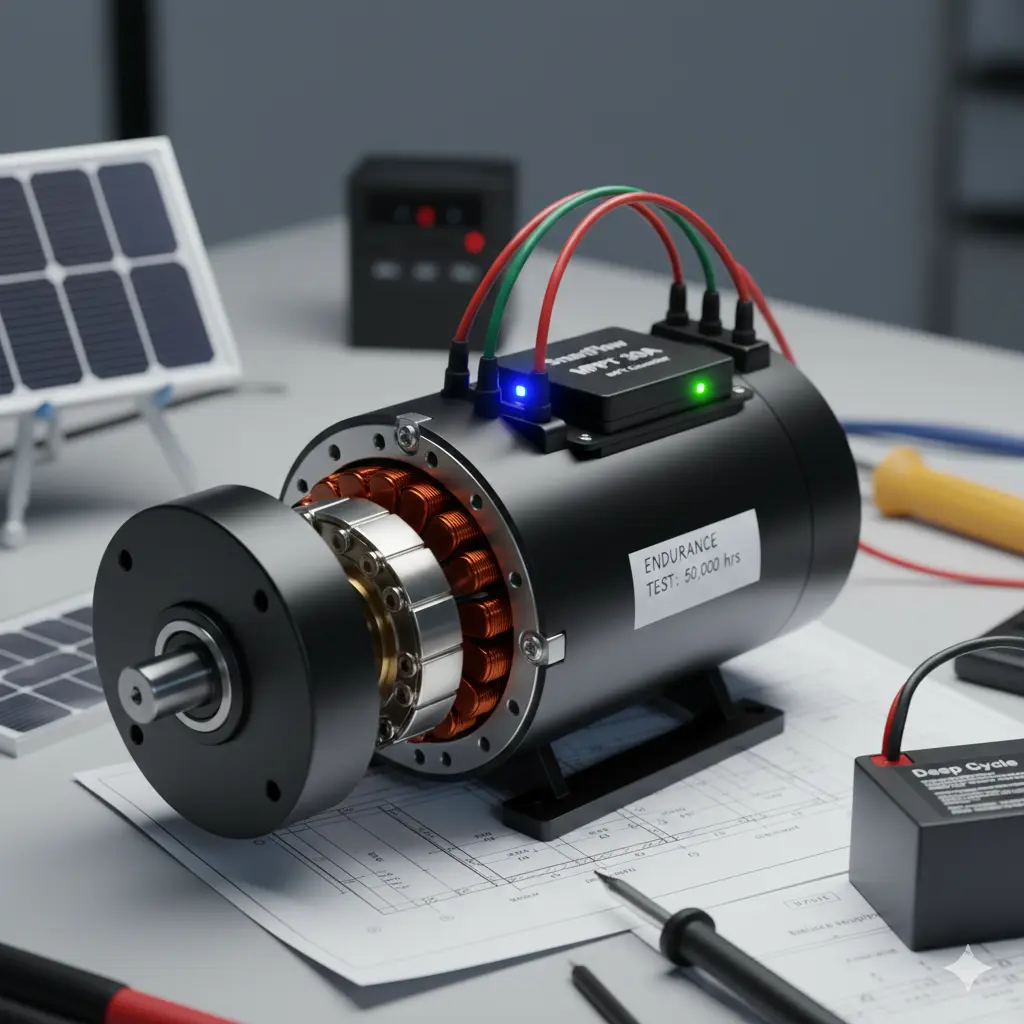
A DC water pump for agriculture is a specialized pumping system designed to run directly on direct current electricity, typically generated by Solar Panels or Deep Cycle Batteries. These pumps are the backbone of sustainable farming because they eliminate the need for expensive fuel or complex AC inverters, allowing for high-efficiency water transfer in remote locations. By utilizing a Brushless DC Motor, these units provide high torque and long-term reliability for tasks ranging from livestock watering to large-scale crop irrigation.
To optimize your farm’s water management, a DC system provides a low-maintenance, cost-effective solution that scales with your needs. By pairing the pump with an MPPT Controller, you ensure the system operates at peak efficiency even during cloudy days, directly converting the maximum available solar energy into water flow.
Why is a DC water pump for agriculture the most efficient choice for modern farmers?
A DC water pump for agriculture is the most efficient choice because it allows for a direct energy connection between the power source and the motor, reducing energy loss by up to 30% compared to AC systems. Traditional AC pumps require an Inverter to convert DC power from solar panels, which introduces “conversion loss.” DC pumps bypass this entirely, making them the superior choice for off-grid sites.
- Zero Fuel Costs: Operates entirely on renewable energy.
- High Durability: Most modern units utilize Stainless Steel housings to resist corrosion from agricultural chemicals or well water.
- Automated Operation: Easily integrates with a Float Switch or Pressure Switch for automated tank filling.
How do you choose the right voltage for your DC water pump for agriculture irrigation?
Choosing the right voltage for a DC water pump for agriculture depends primarily on the distance between your power source and the water source, as well as the required lift. Higher voltage systems, such as 48V or 72V, are more efficient for deep wells because they experience less “voltage drop” over long cable runs. When selecting your unit, you must match the pump’s rated voltage to your battery bank or solar array configuration.
When should you use a 12V vs 24V DC water pump for agriculture livestock applications?
You should use a 12V pump for small-scale, portable applications like mobile livestock troughs or small greenhouses where the water source is less than 20 feet deep. However, for most permanent agricultural setups, a 12V vs 24V water pump comparison usually favors the 24V option. The 24V system provides higher pressure and can move water over longer distances with thinner, less expensive wiring.
What are the main types of DC water pump for agriculture systems available today?
There are two primary types of DC water pump for agriculture: submersible and surface-mounted. The choice depends on where your water is located—whether it is in a deep borehole, a shallow well, or a pond/river. Both types can be optimized for dc water pumps for sale by ensuring the internal components are designed for high-duty cycles.
Is a submersible DC water pump for agriculture better than a surface-mounted unit?

A submersible DC water pump for agriculture is better if your water level is deeper than 20 feet. Submersible pumps are pushed-type systems; they reside underwater and push water upward, which is far more efficient for deep wells. Surface pumps, on the other hand, are “suction-type” and are limited by atmospheric pressure, meaning they struggle to pull water from depths greater than 15–25 feet. For pond-to-field irrigation, a surface-mounted Centrifugal Pump is usually the more accessible and easier-to-maintain option.
How does a brushless DC motor improve the lifespan of a DC water pump for agriculture?
A Brushless DC Motor (BLDC) significantly improves lifespan by removing the carbon brushes found in traditional motors, which are the most common point of mechanical failure. In a Brushless DC motor pump, the commutation is handled electronically. This reduces internal friction, eliminates sparking, and prevents heat buildup, allowing the pump to operate for tens of thousands of hours without maintenance. This is critical for agricultural settings where a pump failure could lead to crop loss or dehydrated livestock.
What are the essential components of a solar-powered DC water pump for agriculture setup?
A complete solar powered DC pump setup requires more than just the pump itself. To ensure reliability and protect your investment, the following components must be integrated:
| Component | Function in Agriculture |
| Solar Panels | Converts sunlight into the DC electricity required to drive the motor. |
| MPPT Controller | Maximizes power output and protects the pump from over-voltage or “dry run” scenarios. |
| Sensors | Water level sensors in the well prevent the pump from running when dry. |
| Check Valve | Prevents water from flowing back into the pump, protecting the internal seals. |
Using a dedicated DC pump controller is non-negotiable for agricultural use. It manages the varying power levels from the sun, ensuring the pump starts smoothly in the morning and shuts down safely at dusk without manual intervention.
How do you calculate the required flow rate for a DC water pump for agriculture in drip irrigation?
To calculate the flow rate, you must determine the total water requirement of your crops per day and the “Peak Sun Hours” available in your region. For example, if your Drip Irrigation system requires 2,000 gallons per day and you have 5 peak sun hours, you need a pump capable of delivering at least 400 Gallons Per Hour (GPH). You must also account for Total Dynamic Head (TDH), which includes the vertical lift plus the friction loss created by the length and diameter of your piping.
[Case Study] How a small-scale farm integrated a DC water pump for agriculture to reduce costs?
In our recent field observation at a 5-acre vegetable farm in a semi-arid region, the owner transitioned from a gasoline-powered pump to a DC water pump for agriculture.
The Challenge:
The farmer was spending approximately $150 per month on gasoline and faced frequent downtime due to engine maintenance. The water source was a shallow well with a 30-foot depth.
The Solution:
We installed a 24V submersible pump paired with three 300W Solar Panels and a 30A MPPT Controller. The system was wired using a standard 12V pump wiring diagram logic but scaled for the 24V series-parallel panel configuration.
The Outcome:
- Operating Cost: Reduced from $150/month to $0.
- Reliability: The system has operated for 18 months without a single manual intervention.
- Crop Yield: Improved by 15% due to the consistent, automated watering schedule provided by the solar cycle.
- Lesson Learned: We found that adding a simple Pre-filter to the pump intake significantly reduced the wear on the internal impellers caused by fine sand in the well.
FAQ: Common Questions About DC Agricultural Pumps
- Can I run a DC pump directly from a solar panel without a battery? Yes, by using a controller, you can run the pump directly from panels, which is often more efficient for irrigation.
- What is the maximum lift for a DC submersible pump? High-end DC pumps can reach lifts of over 500 feet, though most agricultural units are optimized for 100–300 feet.
- How long do DC pumps last? With a Brushless DC Motor, these pumps typically last 8 to 10 years before requiring significant service.
- Do I need a special pipe for DC pumps? Standard HDPE or PVC piping works, but ensure the pressure rating exceeds the pump’s maximum output.
- What happens on cloudy days? The flow rate will decrease. Using an MPPT Controller helps keep the pump spinning even in low light.
- Can these pumps handle fertilizers? Only if they are rated for “chemigation.” Standard pumps may suffer seal damage from corrosive chemicals.
- Is it hard to install the wiring? No, following a 12V pump wiring diagram is straightforward for most DIY users, focusing on waterproof connections.
- How do I protect the pump from running dry? Most modern controllers include “Dry Run Protection” via a sensor placed just above the pump.
- Can I use a DC pump for high-pressure sprinklers? DC pumps are better suited for Drip Irrigation or tank filling; they generally produce lower pressure than AC grid pumps.
- What size solar panel do I need? Generally, your solar array’s wattage should be 25–30% higher than the pump’s rated power to account for environmental losses.
If you are ready to modernize your farm’s water delivery, selecting a high-quality DC water pump for agriculture is the most impactful investment you can make this season.