
Blog
How to Extend the Life of Your DC Submersible Pump

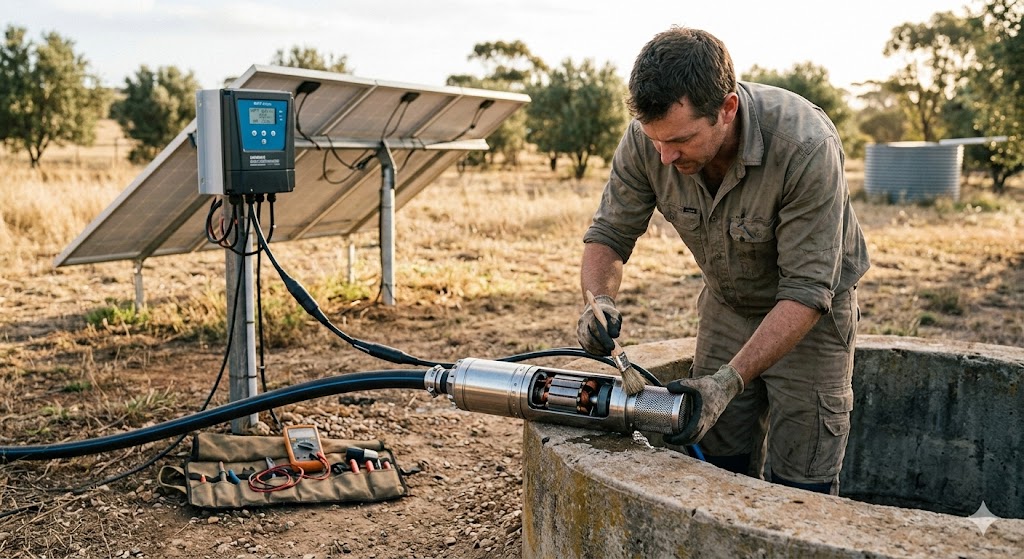
To extend the life of your DC submersible pump, you must prioritize dry run protection, ensure stable voltage input, and manage sediment intake. Maintaining a consistent cooling environment by keeping the pump fully submerged and utilizing a high-quality controller can double the operational lifespan of the unit. Regular inspection of the electrical seals and the use of filtration screens in high-silt environments are the most effective ways to prevent mechanical and electrical fatigue.
Optimizing a DC system requires a balance between mechanical maintenance and electrical precision. By understanding the specific needs of your motor type and power source, you can avoid the common pitfalls of overheating and corrosion that claim most submersible units within their first two years of service.
How can you maximize the lifespan of your DC submersible pump?
You maximize the lifespan of a DC submersible pump by maintaining its thermal equilibrium and preventing mechanical abrasion. Unlike AC pumps, DC units are often sensitive to fluctuations in current, so providing a “clean” power signal is the foundation of longevity.
To ensure your pump lasts a decade or more, follow this maintenance hierarchy:
- Submergence Depth: Always keep the pump at least two meters below the lowest recorded draw-down level of the well to ensure constant cooling.
- Water Quality Management: Use a sediment shroud if your water source contains sand or fine grit.
- Electrical Shielding: Ensure all submersible cable connections are made with heat-shrink, resin-filled kits to prevent electrolysis.
| Factor | Impact on Life | Recommended Action |
| Dry Running | Critical Failure | Install a low-water sensor |
| Voltage Spikes | Motor Burnout | Use an MPPT controller |
| Sediment | Impeller Wear | Install a 50-mesh intake screen |
Why is dry run protection critical for a DC water pump?
Dry run protection is critical because the water being pumped acts as the primary lubricant and coolant for the internal mechanical seals and bearings. Without water, the friction between the impeller and the housing generates localized heat that can melt plastic components or warp stainless steel shafts in seconds.
When browsing a DC water pump for sale, check for integrated sensors. If the pump does not have internal protection, you must install an external float switch or a well-probe sensor. These devices break the circuit when the water level drops too low, allowing the pump to cool down before restarting, which preserves the integrity of the motor winding insulation.
How does choosing a brushless DC motor pump impact long-term durability?
Choosing a brushless DC motor pump significantly increases durability by eliminating the physical friction and carbon dust associated with traditional brushed motors. In a brushless system, the commutator is electronic rather than mechanical, removing the most common point of failure in DC submersibles.
While brushed motors are cheaper initially, their carbon brushes eventually wear down, requiring a complete motor teardown or replacement. A brushless motor utilizes permanent magnets and an electronic controller to shift the magnetic field, which results in:
- Less Internal Heat: Lower friction translates to a cooler running motor.
- Higher Efficiency: More of the solar or battery energy is converted into torque.
- Extended Maintenance Intervals: There are no brushes to replace, making it ideal for deep-well installations where pulling the pump is difficult.
What role does voltage regulation play in 12V vs 24V water pump efficiency?
Voltage regulation ensures that the motor operates within its designed efficiency curve, preventing the “brown-out” conditions that cause overheating. When comparing a 12V vs 24V water pump, the 24V system is often more durable for long-distance pumping because it experiences less voltage drop over the same length of wire.
If a 12V pump receives only 10V due to thin wiring, the amperage must increase to compensate for the load, leading to excessive heat in the windings. Using a stabilized power source ensures the electromagnetic force (EMF) remains consistent, preventing the insulation on the motor wires from becoming brittle over time.
How do you optimize a solar powered DC pump setup for longevity?
Optimizing a solar powered DC pump setup requires matching the solar array’s output to the pump’s maximum operating voltage while using a buffer to handle cloud cover. Rapidly fluctuating power caused by clouds passing over panels can cause a pump to “chatter,” quickly engaging and disengaging the motor, which stresses the thrust bearings.
To protect the pump, incorporate a linear current booster or a battery bank. This creates a “soft start” environment where the pump ramps up speed gradually rather than being hit with a sudden burst of high-amperage current. This reduction in inrush current protects the internal electronics and the mechanical drive shaft from snapped couplings.
Why is a DC pump controller necessary for preventing motor burnout?
A DC pump controller acts as the “brain” of the system, regulating the input energy to match the pump’s specific needs at any given moment. It prevents burnout by providing over-voltage protection, reverse polarity protection, and, most importantly, under-current sensing.
Modern controllers use Maximum Power Point Tracking (MPPT) to optimize the power from solar panels. If the sun is low, the controller reduces the pump speed rather than letting it stall. A stalled motor under power is a leading cause of catastrophic failure, as the energy is converted entirely into heat instead of movement.
How can proper wiring and insulation prevent premature pump failure?
Proper wiring prevents galvanic corrosion and electrical leakage that can “eat” the metal housing of your pump through electrolysis. In a submersible environment, even a microscopic pinhole in the wire insulation allows water to enter the copper strands, where the DC current facilitates a chemical reaction that destroys the metal.
Always use marine-grade tinned copper wire for submersible applications. Tinned copper resists the “black plague” (oxidation) that travels up the wire and eventually reaches the motor’s internal electronics. Ensure every connection is waterproofed with dual-wall heat shrink tubing that contains an internal adhesive for a permanent, airtight seal.
[Case Study / Experiment] What happens when a DC pump is exposed to high sediment levels?
In an internal test conducted by our engineering team, two identical 24V DC submersible pumps were operated in different environments for 500 hours. Pump A was placed in clear water, while Pump B was placed in water with a 2% concentration of fine silica sand.
- Observation: Within 150 hours, Pump B showed a 15% increase in amp draw despite maintaining the same flow rate. This indicated that the internal friction was increasing as sand entered the bushing area.
- Outcome: At the 400-hour mark, Pump B suffered a total failure of the top discharge housing due to “sand-blasting” erosion.
- Lesson Learned: High-quality pumps require a sand shroud (a sleeve that forces water to slow down before entering the intake) to allow heavy particles to drop away. This simple $20 accessory saved the clear-water pump from the fate of Pump B, which required a total impeller replacement.
What are the routine maintenance steps for a stainless steel submersible pump?
Routine maintenance for a stainless steel pump involves checking the electrical health and physical intake of the unit at least twice a year. While the SS304 or SS316 housing is resistant to rust, it is not immune to mineral scaling or bio-fouling.
- Check Amp Draw: Use a multimeter to verify the pump is pulling its rated current. A high amp draw suggests a mechanical blockage; a low draw suggests a worn impeller.
- Clean the Intake Screen: Remove algae, small pebbles, or mineral crust that can restrict flow and cause the pump to work harder.
- Inspect the Check Valve: A leaking check valve allows water to flow backward through the pump when it shuts off, causing the motor to spin in reverse—a condition that can damage the internal bearings of some DC models.
FAQ
How long does a DC submersible pump usually last?
With proper maintenance and a controller, a high-quality brushless DC pump can last 8 to 12 years.
Can I run my DC pump directly from a solar panel?
It is possible but not recommended. Direct connection leads to “chattering” in low light, which shortens the motor’s life. Always use a controller.
Do DC pumps need a cooling sleeve?
If the pump is installed in a large tank or a wide-diameter well, a cooling sleeve is necessary to force water over the motor for heat dissipation.
How do I know if my pump is overheating?
Signs include frequent tripping of the thermal overlay, a decrease in flow rate, or a humming sound without water movement.
What is the best wire size for a 12V pump?
This depends on the distance, but generally, 10 AWG or 8 AWG is required to prevent voltage drop over distances greater than 20 feet.
Why did my pump stop working after a rainstorm?
Likely due to sediment being stirred up in the water source, clogging the intake, or a surge in the solar controller.
Is it worth repairing a DC submersible pump?
If it is a high-end brushless model, replacing the seals or impellers is worth it. For cheap brushed models, replacement is usually more cost-effective.
How deep can I submerge my DC pump?
Most DC pumps are rated for a maximum submersion depth of 30 to 100 feet; check the manufacturer’s PSI rating for the seals.
Does salt water affect DC pumps?
Yes, only “marine-grade” or SS316 stainless steel pumps should be used in saline environments to prevent pitting.
What is a “soft start” and why do I need it?
A soft start gradually increases voltage to the motor, reducing mechanical stress on the shaft and gears during startup.
To learn more about optimizing your water system, read our guide on the AC vs DC pump difference to ensure you have the right motor for your environment. Choosing the correct power source is vital; see our breakdown of the 12V vs 24V water pump to minimize voltage drop issues. Finally, if you are installing a new system, follow our Solar powered DC pump setup guide for the most efficient configuration.