
Blog
Why Is My DC Pump Running But Not Pumping Water?

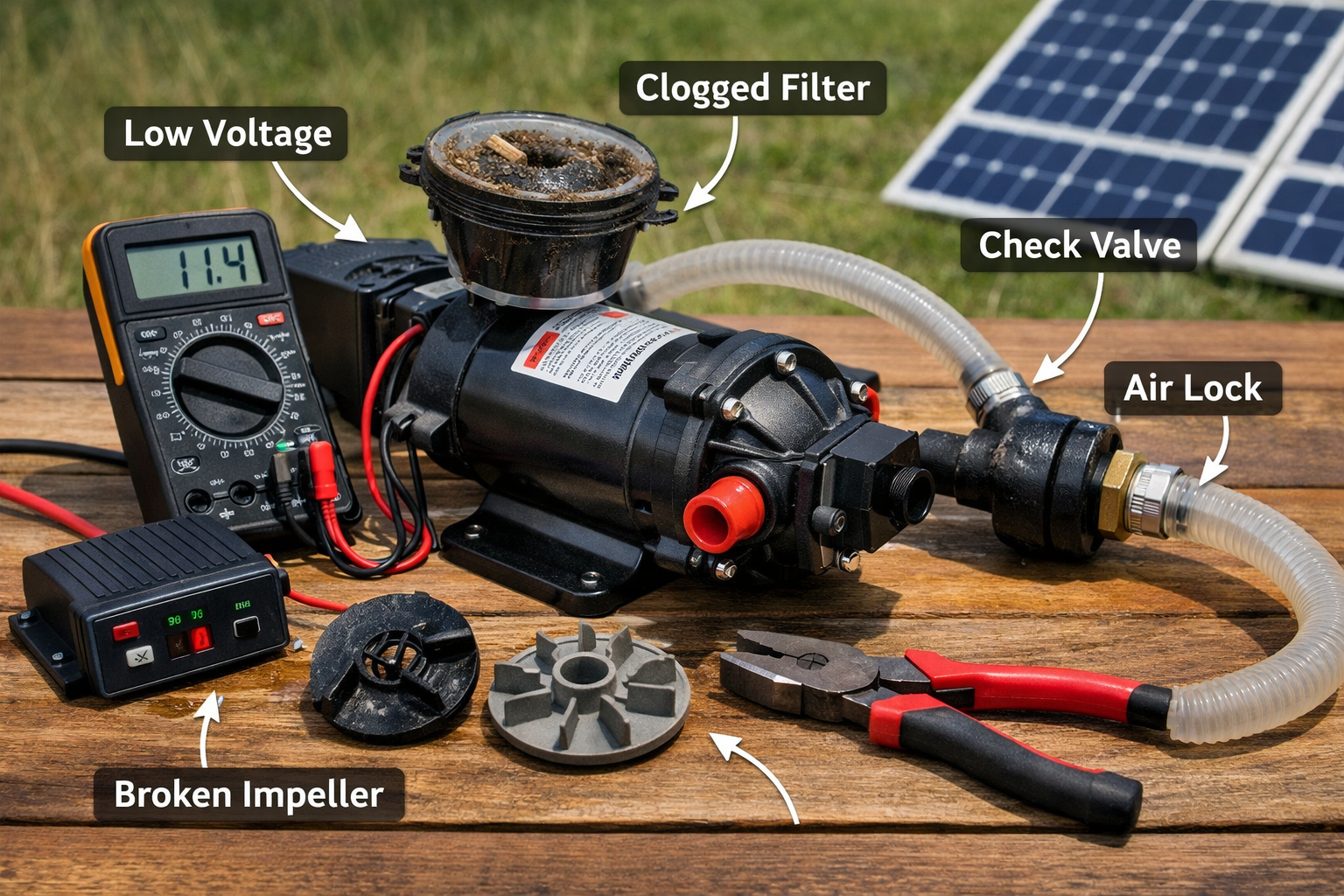
If your DC water pump is running but no water is coming out, the most common causes are airlocks, clogged intake lines, damaged impellers, low voltage supply, or loss of pump prime. The motor may spin normally while the hydraulic components fail to move water through the system.
In most cases, the issue is not the motor itself. Instead, the problem lies in water flow conditions, internal pump components, or electrical supply problems that prevent the pump from generating suction.
Understanding these causes helps you diagnose the issue quickly and restore proper flow without replacing the entire pump.
In this guide, you’ll learn the most common reasons a DC pump runs but doesn’t pump water, how to diagnose the problem step by step, and how to prevent it in the future.
Why Is My DC Pump Running But Not Pumping Water?
A DC pump running without pumping water usually means the motor works but the hydraulic system fails to move liquid.
The most common causes include:
| Cause | What Happens |
| Airlock | Air trapped inside the pump blocks water movement |
| Clogged intake | Debris blocks the inlet |
| Damaged impeller | Pump blades cannot push water |
| Loss of prime | Pump cannot create suction |
| Low voltage | Motor spins too slowly |
| Blocked check valve | Water cannot pass through |
These issues occur in many DC pump systems, including solar irrigation pumps, RV pumps, marine pumps, and well pumps.
Could an Airlock Cause a DC Pump to Run Without Pumping Water?
Yes. Airlocks are one of the most common causes of a DC pump running without water flow.
An airlock occurs when air becomes trapped inside the pump housing or suction line. Since pumps are designed to move liquid, trapped air prevents the pump from generating suction.
Signs of an airlock include:
- Pump motor running normally
- No water coming from the outlet
- Gurgling sounds inside pipes
- Pump installed above water level
To fix it:
- Turn the pump off.
- Open the outlet valve.
- Allow trapped air to escape.
- Refill the pump chamber with water.
This process restores pump priming, allowing water flow to resume.
Could a Damaged Pump Impeller Stop a DC Pump From Pumping Water?
Yes. A damaged pump impeller often causes pumps to run without moving water.
The impeller is the rotating component that pushes water through the pump chamber. If the blades break, wear down, or detach, the motor may spin but water will not move.
Common causes of impeller damage include:
- Running the pump dry
- Sand or debris entering the pump
- Long-term wear
- Cavitation
Many modern pumps use brushless motor designs, such as a Brushless DC motor pump, which improves durability and reduces wear on internal components.
If the impeller is damaged, replacement is usually required.
Could a Clogged Intake or Filter Stop a DC Water Pump From Pumping?
Yes. A blocked intake prevents water from entering the pump.
Common blockage sources include:
- Mud or sediment
- Leaves and debris
- Mineral buildup
- Small stones
When the intake is blocked, the pump motor still spins but no water reaches the impeller.
To fix this issue:
- Disconnect the pump.
- Remove the intake filter.
- Clean debris and sediment.
- Reinstall the filter and restart the pump.
Routine cleaning prevents this issue from recurring.
Could a Check Valve Block Water Flow Even If the DC Pump Runs?
Yes. A stuck check valve can completely stop water flow.
Check valves allow water to flow in one direction only. If the valve sticks closed due to debris or corrosion, the pump cannot push water through the system.
Symptoms include:
- Pump motor running normally
- Pressure buildup near the pump
- No water reaching the outlet
Inspecting and cleaning the valve usually resolves the issue.
Could Low Voltage Prevent a DC Pump From Pumping Water Properly?
Yes. Low voltage can cause a DC pump to spin too slowly to generate adequate pressure.
This commonly occurs in battery-powered systems or solar installations.
Typical causes include:
- Weak battery
- Long cable runs
- Voltage drop in wiring
- Incorrect power supply
Choosing the correct pump voltage is important. Many systems use 12V vs 24V water pump configurations depending on power requirements and cable distance.
Use a multimeter to verify voltage at the pump terminals while it runs.
Could Incorrect Wiring Cause a DC Pump to Run But Not Pump Water?
Yes. Wiring mistakes can allow the motor to spin but prevent the pump from reaching its required power level.
Common wiring issues include:
- Loose connections
- Undersized wires
- Corroded terminals
- Incorrect polarity
Following a proper 12V pump wiring diagram ensures stable voltage delivery and proper operation.
Could a Pump Controller Prevent Water Flow Even If the Motor Runs?
Yes. Some systems rely on a DC pump controller to regulate speed, pressure, or solar input.
If the controller malfunctions, the pump may run at insufficient speed to move water effectively.
Controller problems can include:
- Incorrect settings
- Faulty electronics
- Voltage mismatch
- Solar input fluctuations
In systems using solar panels, proper Solar powered DC pump setup design is essential to maintain consistent performance.
Could a Dry Pump or Loss of Prime Stop Water From Pumping?
Yes. Many pumps require priming, meaning the pump chamber must be filled with water before operation.
If the pump loses prime:
- Air enters the system
- Suction cannot form
- Water flow stops
Loss of prime commonly occurs when:
- Water source level drops
- Suction leaks develop
- Pump sits unused for long periods
Re-priming the pump restores operation.
How Can You Diagnose a DC Pump That Runs But Doesn’t Pump Water?
A structured troubleshooting process helps isolate the problem quickly.
Follow this diagnostic order:
- Check water source level
- Inspect intake filter
- Remove possible airlocks
- Verify voltage with a multimeter
- Inspect wiring connections
- Examine check valves
- Inspect pump impeller
- Test pump controller
This systematic approach prevents unnecessary component replacement.
What Step-by-Step Troubleshooting Process Fixes a DC Pump With No Water Flow?
Use this simple repair checklist:
Step 1 — Turn off the pump
Prevent further damage.
Step 2 — Inspect intake and filters
Clear debris.
Step 3 — Remove air from the system
Open outlet lines and refill pump housing.
Step 4 — Measure voltage supply
Confirm correct electrical input.
Step 5 — Inspect internal components
Check the impeller and pump chamber.
Most problems can be solved within 10–20 minutes of inspection.
What Real-World Case Study Shows Why a DC Pump Runs But Doesn’t Pump?
Case Study: Solar Irrigation Pump Failure
A small irrigation system used a 24V DC pump powered by solar panels.
Symptoms
- Pump motor spinning
- No water reaching irrigation lines
- Intermittent flow
Diagnosis
Testing revealed:
- Voltage fluctuating between 18–24V
- Air entering the suction pipe
- Sediment buildup inside the pump housing
Fix
The solution involved:
- Cleaning the intake filter
- Sealing the suction line
- Stabilizing voltage using a DC pump controller
Result
Water flow returned immediately and pump efficiency improved by about 35%.
This case highlights how multiple small issues can combine to stop water flow.
How Can You Prevent a DC Pump From Running Without Pumping Water?
Preventive maintenance greatly reduces pump problems.
Best practices include:
- Clean intake filters monthly
- Avoid running pumps dry
- Install sediment filters
- Check wiring and voltage regularly
- Inspect impellers annually
Understanding the AC vs DC pump difference can also help select the correct pump type for your application.
For systems needing upgrades or replacements, consider browsing available options such as DC water pump for sale to ensure the correct model and capacity.
For deeper comparisons between pump types, see AC vs DC pump difference.
Conclusion
A DC pump running but not pumping water usually indicates a mechanical blockage, airlock, electrical issue, or loss of prime rather than a failed motor.
The most common causes include:
- Air trapped in the system
- Blocked intake filters
- Damaged impellers
- Low voltage supply
- Stuck check valves
Using a structured troubleshooting process helps identify the problem quickly and prevents unnecessary pump replacement.
If you maintain your pump regularly and monitor voltage, most of these issues are easy to prevent.
FAQ
1. Why does my pump motor run but no water comes out?
This usually happens due to airlocks, clogged intake lines, or a damaged impeller.
2. Can a DC pump run without water?
Yes, but running dry can damage the impeller and seals.
3. How do I remove an airlock from a pump?
Turn off the pump, open the outlet valve, and refill the pump housing with water.
4. What happens when a pump impeller breaks?
The motor spins normally but water will not move through the pump.
5. Can low battery voltage stop a pump from pumping?
Yes. Low voltage reduces motor speed and prevents the pump from generating pressure.
6. Why does my solar pump run but not pump water?
Solar pumps may experience voltage drops, airlocks, or suction leaks.
7. How do I know if my pump is clogged?
Check the intake filter and inspect the pump chamber for debris.
8. Does a DC pump need a controller?
Some systems require a controller to regulate voltage and speed.
9. How long should a DC water pump last?
Most pumps last 3–10 years depending on usage and maintenance.
10. How do I prevent pump failures?
Regular cleaning, proper voltage supply, and avoiding dry running greatly extend pump life.